
Research
Estimating the Economic Footprint of Cooperatives in the Carolinas
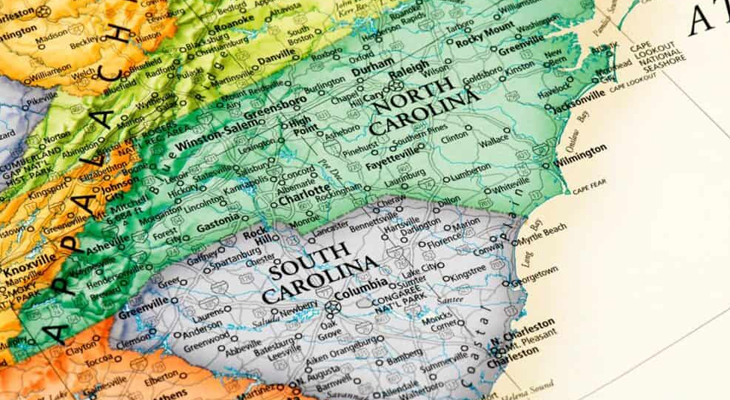
Carolina Common Enterprise (CCE) and the Cooperative Council of the Carolinas (CCC) partnered with NCGrowth to assess the economic footprint of cooperatively owned enterprises across North and South Carolina. This assessment was informed by the 2009 national cooperative census by the University of Wisconsin Center for Cooperatives and represents a renewed effort to measure the scale, diversity, and community contribution of cooperatives in the region.

Reidsville Chamber Strategic Plan
The Reidsville Chamber of Commerce has served as a champion for the local business community since. Over the past 15 years, the Chamber has tripled its budget and purchased a downtown building that now anchors its presence in the heart of Reidsville. This five-year strategic plan builds on that foundation and charts a clear path forward as downtown Reidsville and Rockingham County continue to grow.

A Guide for Building Inclusive Economic Opportunity Through Strategic Purchasing
Public institutions in the United States spend $1.3 trillion annually in procurement, representing a significant opportunity to drive equitable economic development in communities across America. While the U.S. has over 5.9 million employer enterprises, almost half are historically underutilized businesses (HUBs) that remain underrepresented in public procurement. The definition of HUBs varies slightly from institution to institution, but generally, they are owned by Black, Native American, Hispanic or Asian American people, disabled individuals, women and veterans.

A New Look at Economic Distress in North Carolina
We are pleased to announce the release of An Assessment of the North Carolina County Distress Rankings (Tiers), a comprehensive study evaluating the effectiveness of North Carolina’s County Distress Rankings System, commonly known as the Tiers System. This report, produced by NCGrowth and the ncIMPACT Initiative with support from the North Carolina Collaboratory, provides key insights into the system’s current application and offers recommendations for improvement.

NC County Tier System: A Review
The North Carolina County Tiers system was developed out of a desire to spur economic development in economically distressed geographic areas. County Tier designations were originally intended to help determine whether or not a company would receive tax incentives for local job creation. In the Tiers system, counties are classified from most distressed, Tier 1, to least, Tier 3. Since its inception, the Tiers system has also been used to allocate school funds, determine health care provider loan forgiveness, and more. This report provides an overview of the NC Tiers system, current challenges, and alternatives.

NCGrowth Report: Entrepreneurship-led Economic Development
North Carolina’s entrepreneurial landscape is thriving, boasting 178,000 new businesses in 2022 and over 360 entrepreneurial ecosystem partners dedicated to bolstering businesses statewide. Despite its geographic diversity, the state’s entrepreneurial support network remains somewhat disconnected, with outcomes varying across regions and organizations. This report explores the intersection of entrepreneurship and economic development incorporating insights from interviews with key players, review of existing reports and research, and case studies. This report identifies a disparity in the focus of economic development efforts, which are often centered on business recruitment, retention, and entrepreneurial support, with local entrepreneurs often left uninformed about these activities. Economic development initiatives related to entrepreneurship vary significantly depending on factors like location, investment sources, digital infrastructure, and networking capabilities. Within this context, four primary themes emerged as problems entrepreneurship-led economic development could help to resolve: 1) Access to Capital: Ensuring entrepreneurs have access to necessary funding and resources throughout their business development stage; 2) Coordination of the Business Development Environment: Raising awareness and promoting available resources and initiatives among local business owners and entrepreneurs; 3) Digital Infrastructure Development: Fostering digital capabilities and connectivity, which are crucial for modern business operations; and 4) Mentorship and Network Collaboration: Facilitating mentorship opportunities, building a supportive entrepreneurial community, and connecting businesses regionally.

Democratizing Infrastructure
In the wake of the COVID-19 pandemic, two large infrastructure-related bills have been enacted. The Infrastructure Investment and Jobs Act (IIJA), signed into law in November 2021, provides funding for a wide range of activities including roads, rail, transit, broadband, water and electrical infrastructure.

Maryann Feldman presents to the President’s Council of Advisors on Science & Technology
On September 28th, 2021, CREATE’s Faculty Director Dr. Maryann Feldman presented at the “Strengthening US Science & Technology Global Leadership for the 21st Century” at the inaugural meeting of the President’s Council of Advisors on Science and Technology (PCAST). The Council is comprised of forty advisors outside of the federal government that provide expertise and guidance to the President in policy matters regarding science, technology, and innovation. This particular session was focused on current issues regarding equitable economic development, specifically during the country’s post-pandemic recovery.

Maryann Feldman presents to the President’s Council of Advisors on Science & Technology
On September 28th, 2021, CREATE’s Faculty Director Dr. Maryann Feldman presented at the “Strengthening US Science & Technology Global Leadership for the 21st Century” at the inaugural meeting of the President’s Council of Advisors on Science and Technology (PCAST). The Council is comprised of forty advisors outside of the federal government that provide expertise and guidance to the President in policy matters regarding science, technology, and innovation. This particular session was focused on current issues regarding equitable economic development, specifically during the country’s post-pandemic recovery.

NCGrowth Community Highlight: Mitchell County
Mitchell County in Western North Carolina has been exploring ways to leverage and develop their natural and outdoor assets for economic development. During the Spring of 2020, NCGrowth partnered with Mitchell County to map the county’s outdoor recreation assets and outdoor industry businesses in order to identify potential avenues for outdoor recreation based economic development.

Research Highlight: Policy and Ecosystem Evolution
CREATE Faculty Director, Dr. Maryann Feldman, and Georgia Tech’s Dr. Paige Clayton explore how policy might vary over the life cycle of innovative ecosystems in this research paper, presented at APPAM’s 42nd Annual Fall research conference. This paper reviews the evidence on how ecosystems evolve over time as firms and institutions develop, with identification of a set of organizational logics that prevail for each stage of ecosystem development.

Variation in organizational practices: are startups really different?
The idea that new ventures are simple mimetic reflections of the organizational practices of existing organizations contradicts the recognized importance of organizational diversity for innovation. There is an inherent contradiction in the literature between the persistence implied by the inheritance of practices from prior employment, and the experimentation prevalent in the organizational practices contributed by new organizations.

Review of the SBIR and STTR Programs at the Department of Energy
Since its founding in 1982, the Small Business Innovation Research (SBIR) program has become the largest and most comprehensive public research and development funding program of small business research in the United States. An underlying tenet of the SBIR program, and the related Small Business Technology Transfer (STTR) program, is that small and young firms are an important source of new ideas that provide the underlying basis for technological innovation, productivity increases, and subsequent economic growth. By involving qualified small businesses in the nation’s research and development efforts, SBIR/STTR grants stimulate the development of innovative technologies and help federal agencies achieve their missions and objectives.
Entrepreneurial Ecosystems
Description: In pursuit of building prosperous economies, policymakers are increasingly interested in entrepreneurial ecosystems. The concept positions entrepreneurs and entrepreneurial communities as central actors in building the benefits associated with geographic agglomerations. This report presents the concept of ecosystems as a new understanding of how entrepreneurial economies work and how they develop over time.

Philanthropic support of Higher Education Major Gifts form High Net Worth Individuals
In search of additional sources of revenue, universities and colleges have cultivated individual donors to provide support to academic projects and initiatives. Major gifts (of at least $100,000) from private donors are typically lost in an aggregation of all types of philanthropy, rather than being considered as their own separate category. This chapter provides evidence of the contributions of high net worth individuals to university programs, with a focus on donors’ support of scientific research.

We Miss you George Bailey: The Effect of Local Banking Conditions on the County-Level Timing of the Great Recession
Community banks are the central financial institution in many places. They have the capacity to alleviate credit constraints of small firms. This may increase economic resilience, delaying or mitigating the effects of the Great Recession. We estimate how the county-level banking access and community bank market share affect both the timing and duration of the Great Recession.

Regional Income Disparities, Monopoly & Finance
Many of the most prosperous places in the U.S. are hotbeds of technology and also the home bases of companies which exercise monopoly power across much larger territories – nationally, or even globally. This paper makes four arguments about regional income disparities.

Combine Water, Grain, Hops, Yeast and Get – Jobs
How do cities attract mobile firms? The answer, frequently, involves beer. Dr. Maryann Feldman has recently published an editorial describing how cities are increasingly selling themselves on quality of life metrics, talent, and trendy amenities that appeal to young professionals. Responding to Amazon’s HQ2 contest, cities across the country listed breweries among their city’s assets while wooing the technology giant. The article is based on a paper that three of her students wrote under her guidance, and the inspirations for which evolved out of a seminar Dr. Feldman taught on science and technology policy. The article, “Catching the whale: A comparison of place promotion strategies through the lens of Amazon HQ2”, was published in Geography Compass this summer by Scott Langford, Allison Lowe Reed, and Adams Nager. Using text analysis of city responses to the HQ2 contest, the paper argues that regions compete on much more than simply low costs of land and labor or business-friendly environment metrics, as traditional theory would assume. In the News and Observer, Dr. Feldman and her students explain how cities reliance on brews when advertising themselves is evidence of a shift in how cities aim to attract jobs and stay competitive.

Catching the whale: A comparison of place promotion strategies through the lens of Amazon HQ2
Identifying potential sites for firm relocation or expansion is a negotiated process that involves both firms and localities. Some firms focus on profit enhancement through cost minimization, while others seek qualities that maximize talent attraction and benefit corporate identity. Simultaneously, localities seek to maximize the economic welfare for residents through job creation and place-based economic development strategies. The purpose of this work is to examine how localities use place promotion strategies to attract relocating or expanding firms based on analysis of proposals submitted by communities in response to the 2017 Amazon HQ2 Request for Proposals. Our results support literature streams that argue quality of life and talent attraction, as well as cost are priorities for place-based economic development strategies. We present a complete picture of place promotion strategies that localities use to differentiate themselves and avoid competing only on cost in the competitive marketplace of corporate recruiting.

The tortoise, the hare, and the hybrid: effects of prior employment on the development of an entrepreneurial ecosystem
Prior employment imprints nascent entrepreneurs with logics for organizing startups. Within a regional ecosystem, entrepreneurs with different employment backgrounds pursue alternative entrepreneurial pathways, each generating distinct, though complementary, regional impacts. By analyzing diverse pre-entrepreneurial employment experiences, no one pathway leads to superior firm performance; prior industry experience generates strong early performance that tapers off, while prior academic experience engenders slow, steady, long-lasting growth. Our approach is well-suited for theorizing ecosystem development and generating policy recommendations in support of ecosystem diversity.

The Future of Emerging Markets: A Development Marathon, not a Growth Sprint
IN THIS PAPER, we share the views of Maryann Feldman and Dáire Dunne on what they see as key drivers of structural change in emerging markets (EM) economies. In particular, we examine how the actions of policy makers, private companies and individual citizens can drive economic progress, influence financial markets and create investment opportunities over time.

Toward understanding the impact of artificial intelligence on labor
Rapid advances in artificial intelligence (AI) and automation technologies have the potential to significantly disrupt labor markets. While AI and automation can augment the productivity of some workers, they can replace the work done by others and will likely transform almost all occupations at least to some degree. Rising automation is happening in a period of growing economic inequality, raising fears of mass technological unemployment and a renewed call for policy efforts to address the consequences of technological change. In this paper we discuss the barriers that inhibit scientists from measuring the effects of AI and automation on the future of work. These barriers include the lack of high-quality data about the nature of work (e.g., the dynamic requirements of occupations), lack of empirically informed models of key microlevel processes (e.g., skill substitution and human–machine complementarity), and insufficient understanding of how cognitive technologies interact with broader economic dynamics and institutional mechanisms (e.g., urban migration and international trade policy). Overcoming these barriers requires improvements in the longitudinal and spatial resolution of data, as well as refinements to data on workplace skills. These improvements will enable multidisciplinary research to quantitatively monitor and predict the complex evolution of work in tandem with technological progress. Finally, given the fundamental uncertainty in predicting technological change, we recommend developing a decision framework that focuses on resilience to unexpected scenarios in addition to general equilibrium behavior.

Technological achievements in entrepreneurial firms – legacy, value chain experience, and division of innovation labour
This paper examines whether founders’ origin is systematically associated with the technological orientation of their new established organisation. Using an exploratory design, we empirically investigate how the technological achievements of organisations are associated with the founder’s prior experience identifying where in the industry’s value chain the founder worked previously. Using a unique dataset of Swedish and Danish biotechnology start-up firms, we explore the relationship between the founders’ prior position in the value chain and the technological achievements of their start-up. Firms established by founders from academia tend to perform well in early stages of technology development, while firms established by founders from further up the value chain tend to exhibit technological achievements in the later stages of development. Building on these results, we discuss possible mechanisms that may trigger these empirical regularities and propose that these mechanisms cause a division of innovation labour among biotechnology start-ups.

Falling Not Far from the Tree: Entrepreneurs and Organizational Heritage
Past research has shown that founders bring important capabilities and resources from their prior employment into their new firms and that these intergenerational transfers influence the performance of these ventures. However, we know little about whether organizational practices also transfer from parents to spawns, and if so, what types of practices are transferred? Using a combination of survey and registrar data and through a detailed identification strategy, we examine these two previously unaddressed questions. Our results provide strong evidence for organizational heritage in practices.